ZX Spectrum 128
128 KB, three-channel sound, and Spain got it first.
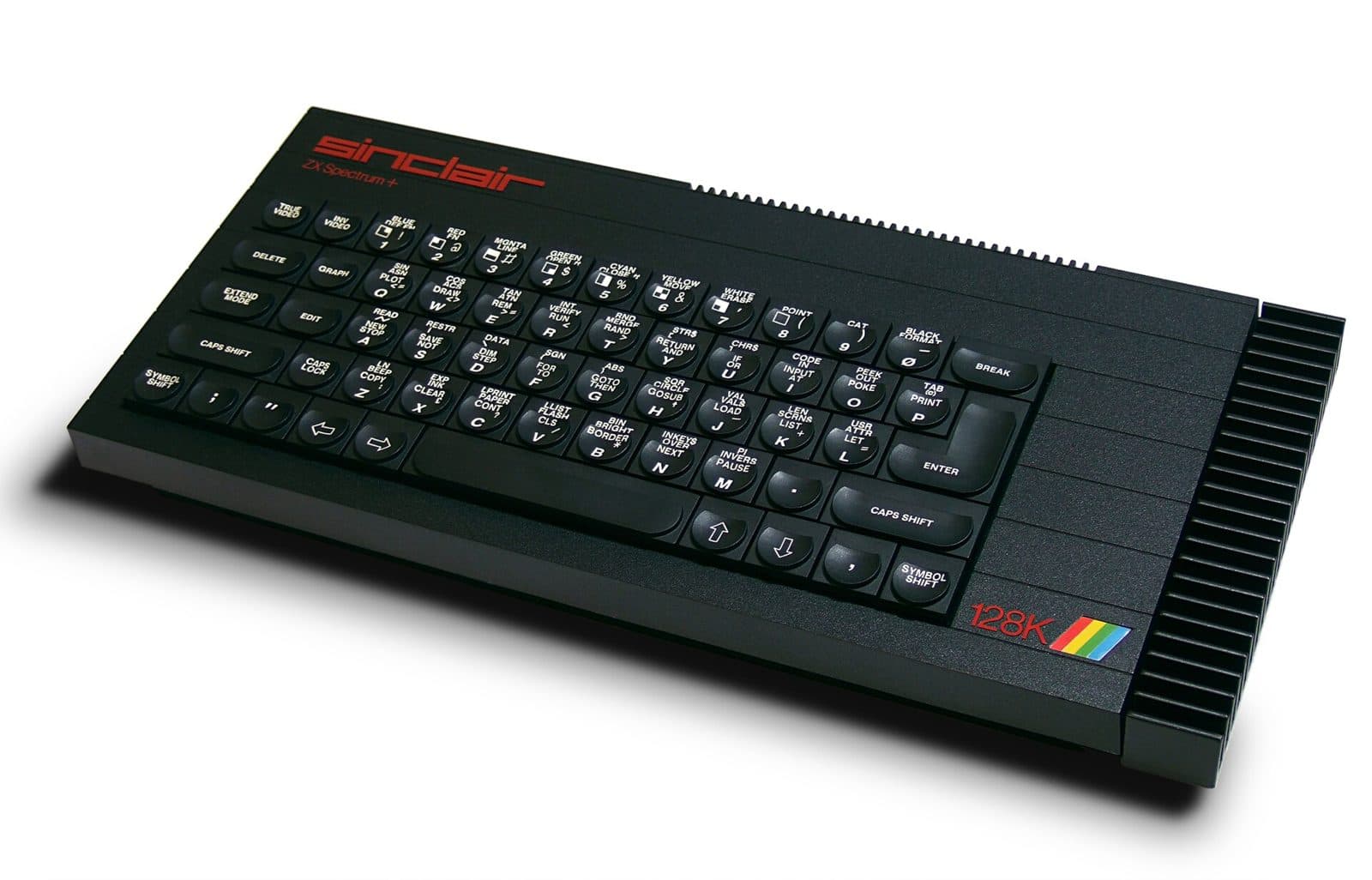
The ZX Spectrum 128 was launched first in Spain, in 1985, and in the UK in February 1986. It brought 128 KB of paged memory, the AY-3-8912 sound chip and a BASIC with a full-screen editor.
Made with Spain
The 128 was developed by Sinclair together with Investrónica, its Spanish distributor, which is why it reached Spain first, in 1985, with a separate numeric keypad. In the UK it came out in February 1986, at £179.95.
It was Sinclair's last Spectrum: in April 1986 Amstrad bought the brand and the rights to the Sinclair computers.
Inside
The Z80A now ran at 3.5469 MHz, and the 128 KB of RAM is split into 16 KB pages that are swapped into a window of the processor's memory space. There are two ROMs: the new 128 BASIC and the familiar 48 BASIC, for compatibility.
The big news is the sound: a General Instrument AY-3-8912 chip with three tone channels and one noise channel, which completely changed the music in games. There is also an RS-232 port that doubles as a MIDI output, and RGB output for a monitor.
At power-up, a menu appears with Tape Loader, 128 BASIC, Calculator, 48 BASIC and Tape Tester. 128 BASIC has a full-screen editor, instead of entering keywords key by key.
Trivia
- 10 REM
The finned heatsink on the side earned it the nickname "toast rack" in the UK.
- 20 REM
In 48 BASIC mode it behaves almost like a 48K, but some games that use precise timing tricks notice the difference in the clock.
- 30 REM
Many games released from 1986 onwards detect the 128 and use the AY chip for music, and stick to the beeper on a 48K.
Try it
Choose “128 BASIC” with ENTER. Here commands are typed letter by letter: try PRINT "HELLO" and ENTER. Quotes are Ctrl + P.
Emulation by JSSpeccy 3 (GPL-3.0). The Spectrum ROM belongs to Amstrad, which allows it to be distributed with emulators.
© 1982 Sinclair Research Ltd
The family: Sinclair
- 1977 Science of Cambridge MK14
- 1980 Sinclair ZX80
- 1981 Sinclair ZX81
- 1982 ZX Spectrum 16K / 48K
- 1984 ZX Spectrum+
- 1984 Sinclair QL
- 1985 ZX Spectrum 128
- 1986 ZX Spectrum +2
- 1987 ZX Spectrum +3
- 1987 ZX Spectrum +2A / +2B
- 2017 ZX Spectrum Next
Compared with the other models
| Model | Year | Processor | Memory | Video | Sound | System |
|---|---|---|---|---|---|---|
| Science of Cambridge MK14 | 1977 | SC/MP · 4,43 MHz | 256 B | LED 7 segmentos | — | Monitor 512 B |
| Sinclair ZX80 | 1980 | Z80A · 3,25 MHz | 1 KB (16 KB) | TTL · 32 × 24 mono | — | 4K BASIC |
| Sinclair ZX81 | 1981 | Z80A · 3,25 MHz | 1 KB (16 KB) | ULA · 32 × 24 mono | — | 8K BASIC |
| ZX Spectrum 16K / 48K | 1982 | Z80A · 3,5 MHz | 16 / 48 KB | ULA · 256 × 192 | Beeper 1 bit | 48 BASIC |
| ZX Spectrum+ | 1984 | Z80A · 3,5 MHz | 48 KB | ULA · 256 × 192 | Beeper 1 bit | 48 BASIC |
| Sinclair QL | 1984 | 68008 · 7,5 MHz | 128 KB | ZX8301 · 512 × 256 | 8049 · beeper | QDOS + SuperBASIC |
| ▶ ZX Spectrum 128 | 1985 | Z80A · 3,55 MHz | 128 KB | ULA · 256 × 192 | AY-3-8912 · 3 ch | 128 BASIC |
| ZX Spectrum +2 | 1986 | Z80A · 3,55 MHz | 128 KB | ULA · 256 × 192 | AY-3-8912 · 3 ch | 128 BASIC |
| ZX Spectrum +3 | 1987 | Z80A · 3,55 MHz | 128 KB | Gate array · 256 × 192 | AY-3-8912 · 3 ch | +3 BASIC + +3DOS |
| ZX Spectrum +2A / +2B | 1987 | Z80A · 3,55 MHz | 128 KB | Gate array · 256 × 192 | AY-3-8912 · 3 ch | +3 BASIC |
| ZX Spectrum Next | 2017 | Z80N (FPGA) · até 28 MHz | 1 MB | FPGA · HDMI / VGA | 3 × AY + DAC | NextZXOS |
Let me know when one arrives: ZX Spectrum 128
Looking for a particular model? Leave your email and we'll let you know when one comes into the shop.