ZX Spectrum +3
A Spectrum with a 3-inch floppy drive and CP/M.
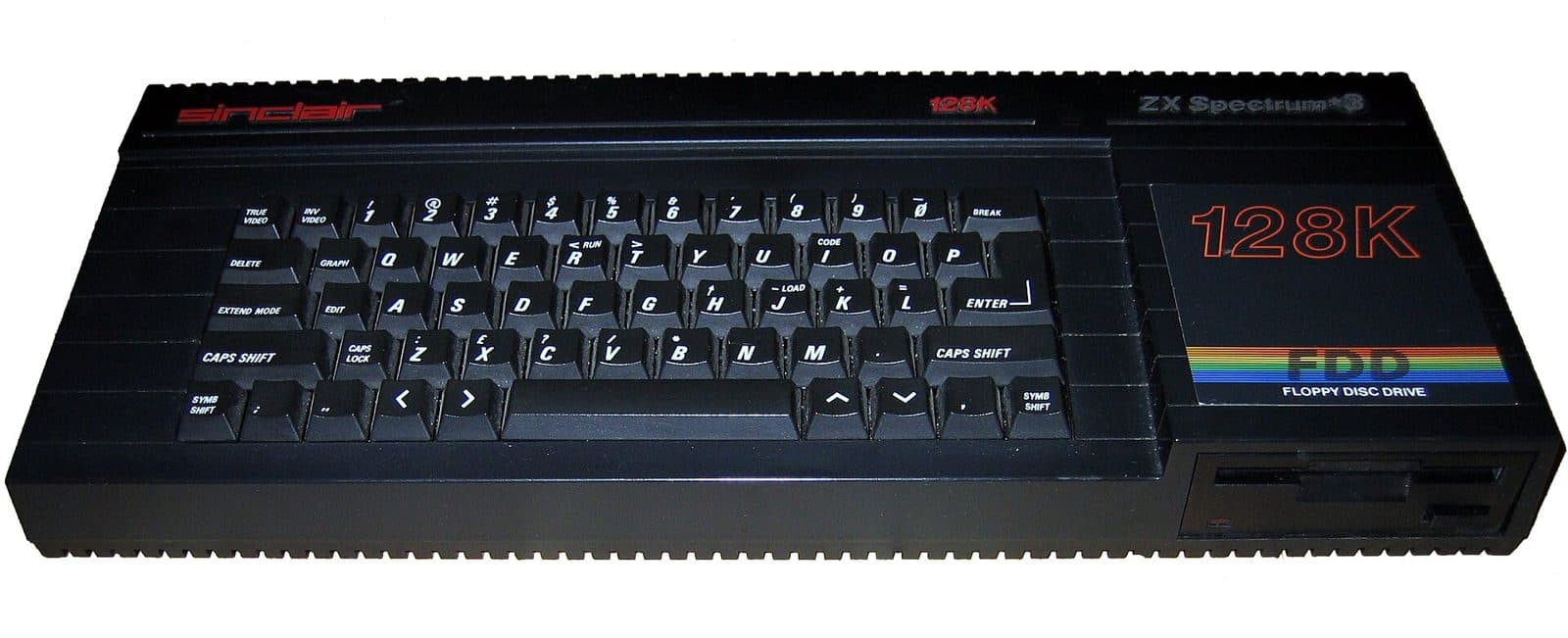
The 1987 ZX Spectrum +3 swapped the cassette recorder for a 3-inch floppy drive, with the +3DOS system and the ability to run CP/M Plus. It has a new 64 KB ROM and an Amstrad gate array.
Floppy disks instead of cassettes
In 1987 Amstrad launched the +3, in black, with a 3-inch floppy drive in place of the tape recorder, the same format as its CPC 664 and 6128 and its PCW word processors. It cost £249.
Each side of a 3" disk holds 180 KB. Loading a game now took seconds instead of minutes, although most games kept coming out on cassette, which you connected through a socket on the side.
Inside
The board is new: the ULA gives way to an Amstrad gate array, and the ROM grows to 64 KB (four of 16 KB) to include +3 BASIC and +3DOS. The floppy controller is a NEC µPD765.
With its own system disk, the +3 runs CP/M Plus, which gave it access to professional software such as word processors and spreadsheets.
The changes to the ROM and timing brought some problems: certain 48K games do not work, and the expansion port changed, which left out some older peripherals.
Trivia
- 10 REM
3" disks were rare and expensive outside the Amstrad world. Today, the drive belt is one of the parts replaced most often.
- 20 REM
The +3 was the last new Spectrum to be launched; production of the family ended in 1992.
- 30 REM
There are now adapters for fitting 3.5" drives or memory cards in place of the 3" drive.
Try it
Choose “128 BASIC” with ENTER. Here commands are typed letter by letter: try PRINT "HELLO" and ENTER. Quotes are Ctrl + P.
This machine runs here as a Spectrum 128K, which it is compatible with.
Emulation by JSSpeccy 3 (GPL-3.0). The Spectrum ROM belongs to Amstrad, which allows it to be distributed with emulators.
© 1982 Sinclair Research Ltd
The family: Sinclair
- 1977 Science of Cambridge MK14
- 1980 Sinclair ZX80
- 1981 Sinclair ZX81
- 1982 ZX Spectrum 16K / 48K
- 1984 ZX Spectrum+
- 1984 Sinclair QL
- 1985 ZX Spectrum 128
- 1986 ZX Spectrum +2
- 1987 ZX Spectrum +3
- 1987 ZX Spectrum +2A / +2B
- 2017 ZX Spectrum Next
Compared with the other models
| Model | Year | Processor | Memory | Video | Sound | System |
|---|---|---|---|---|---|---|
| Science of Cambridge MK14 | 1977 | SC/MP · 4,43 MHz | 256 B | LED 7 segmentos | — | Monitor 512 B |
| Sinclair ZX80 | 1980 | Z80A · 3,25 MHz | 1 KB (16 KB) | TTL · 32 × 24 mono | — | 4K BASIC |
| Sinclair ZX81 | 1981 | Z80A · 3,25 MHz | 1 KB (16 KB) | ULA · 32 × 24 mono | — | 8K BASIC |
| ZX Spectrum 16K / 48K | 1982 | Z80A · 3,5 MHz | 16 / 48 KB | ULA · 256 × 192 | Beeper 1 bit | 48 BASIC |
| ZX Spectrum+ | 1984 | Z80A · 3,5 MHz | 48 KB | ULA · 256 × 192 | Beeper 1 bit | 48 BASIC |
| Sinclair QL | 1984 | 68008 · 7,5 MHz | 128 KB | ZX8301 · 512 × 256 | 8049 · beeper | QDOS + SuperBASIC |
| ZX Spectrum 128 | 1985 | Z80A · 3,55 MHz | 128 KB | ULA · 256 × 192 | AY-3-8912 · 3 ch | 128 BASIC |
| ZX Spectrum +2 | 1986 | Z80A · 3,55 MHz | 128 KB | ULA · 256 × 192 | AY-3-8912 · 3 ch | 128 BASIC |
| ▶ ZX Spectrum +3 | 1987 | Z80A · 3,55 MHz | 128 KB | Gate array · 256 × 192 | AY-3-8912 · 3 ch | +3 BASIC + +3DOS |
| ZX Spectrum +2A / +2B | 1987 | Z80A · 3,55 MHz | 128 KB | Gate array · 256 × 192 | AY-3-8912 · 3 ch | +3 BASIC |
| ZX Spectrum Next | 2017 | Z80N (FPGA) · até 28 MHz | 1 MB | FPGA · HDMI / VGA | 3 × AY + DAC | NextZXOS |
Let me know when one arrives: ZX Spectrum +3
Looking for a particular model? Leave your email and we'll let you know when one comes into the shop.