Sinclair and Spectrum
1989
The Spectrum behind the Curtain
Cut off from Western computers, Eastern Europe and the Soviet Union copied the Spectrum like no other machine, from state factories to boards built at home.
During the Cold War, the CoCom embargo, from the Western export control committee, made it hard to sell computers to the Soviet bloc. That did not stop Eastern countries from designing their own machines and reverse engineering Western ones, and the ZX Spectrum was by far the most copied [1]. The Commodore 64 barely features in this story, probably because its custom chips, the VIC-II and the SID, were difficult and expensive to copy [1].
In the Soviet Union, the embargo was eased in July 1984 for desktop computers, and the Law on Cooperatives of 1987 opened the way to a host of small hardware and software firms [1]. Spectrum clones became so common, and so many people built and modified them in their own way, that it is impossible to count all the versions [1]. One of the simplest was the Leningrad-1, from 1988, designed by Sergey Zonov with 44 common chips and compatible with 90 to 95% of Spectrum software [3]; it was the cheapest of all the mass-produced clones [5].
It had no factory: the Pentagon was built by hobbyists from one end of the Soviet Union to the other.
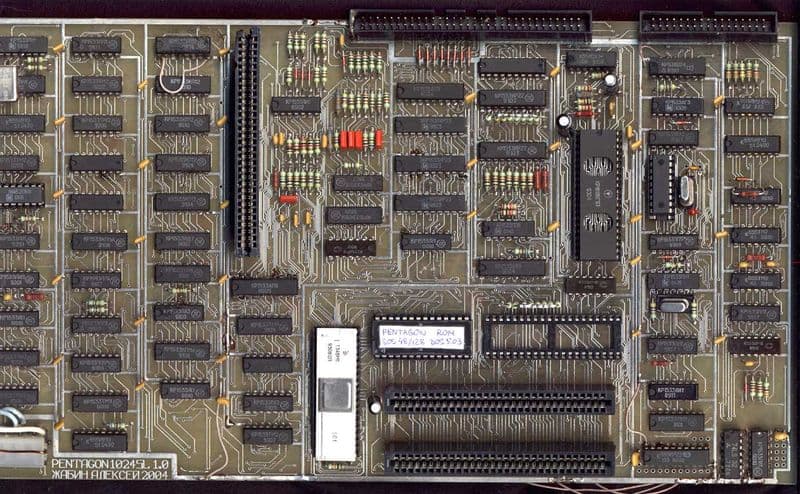
The most famous was the Pentagon, designed by Vladimir Drozdov in 1989. It had no factory: it was built by hobbyists from documentation that circulated freely, and the board was copied all over the former USSR between 1991 and 1996 [2]. The name comes from the shape of the original board, with one corner cut off diagonally, which gave it five sides [2]. It was the most common model, and the Scorpion, by Zonov, in St Petersburg, was less common but more faithful to the original [1].
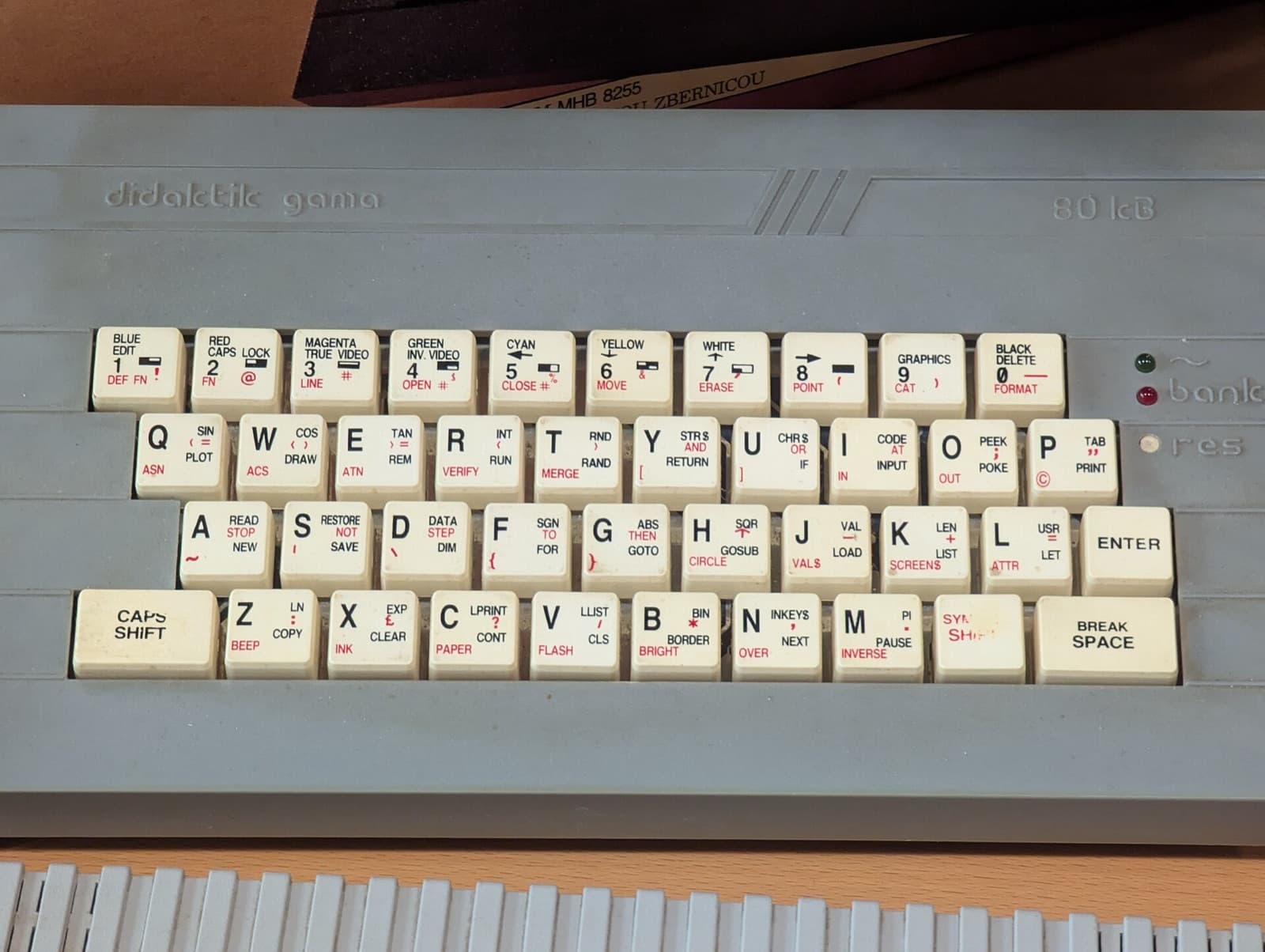
In Czechoslovakia, the Didaktik cooperative, of Skalica, made the Didaktik Gama between 1987 and 1989, with 80 KB of memory and a Ferranti ULA. It was so sought after that there were waiting lists several years long. Next came the Didaktik M, in 1990, now with a Soviet chip from Angstrem in place of the ULA, and the Didaktik Kompakt, in 1992, with a built-in 3.5-inch floppy drive; production ended in 1994 [4].
In Romania, ICE Felix made the HC family from 1985 to 1994, from the HC 85 to the HC 2000, originally designed by Adrian Petrescu [1], and the CIP series, from 1988 to 1993, reached 15,000 units [5]. In Poland, Elwro made the 800 Junior, from 1986, for schools [1]. In Belarus, in Brest, the Byte factory was still producing an average of 1,705 computers a month in 1992 [5].
Many of these clones live on: today's emulators, such as Fuse, reproduce the Pentagon and the Scorpion [1], and some people still build Leningrad-1 replicas today from the schematics of the time [3].
Timeline
- HC 85 … HC 2000 (Romania, 1985–1994)
- Elwro 800 Junior (Poland, 1986)
- Didaktik Gama (Czechoslovakia, 1987–1989)
- CIP (Romania, 1988–1993)
- Leningrad-1 (USSR, 1988)
- Pentagon (USSR, 1989–1996)
- Didaktik M (Czechoslovakia, 1990)
- Didaktik Kompakt (Czechoslovakia, 1992–1994)
Sources
- [1]Discovering Eastern European PCs by hacking them. Today (Bodrato, Caruso e Cignoni) · arXiv, 2019
- [2]Pentagon (computer) · Wikipedia
- [3]ZX Spectrum, Soviet Style: A 44-IC Clone You Can Build · Hackaday, 2025
- [4]Didaktik · Wikipedia
- [5]List of ZX Spectrum clones · Wikipedia
The machines
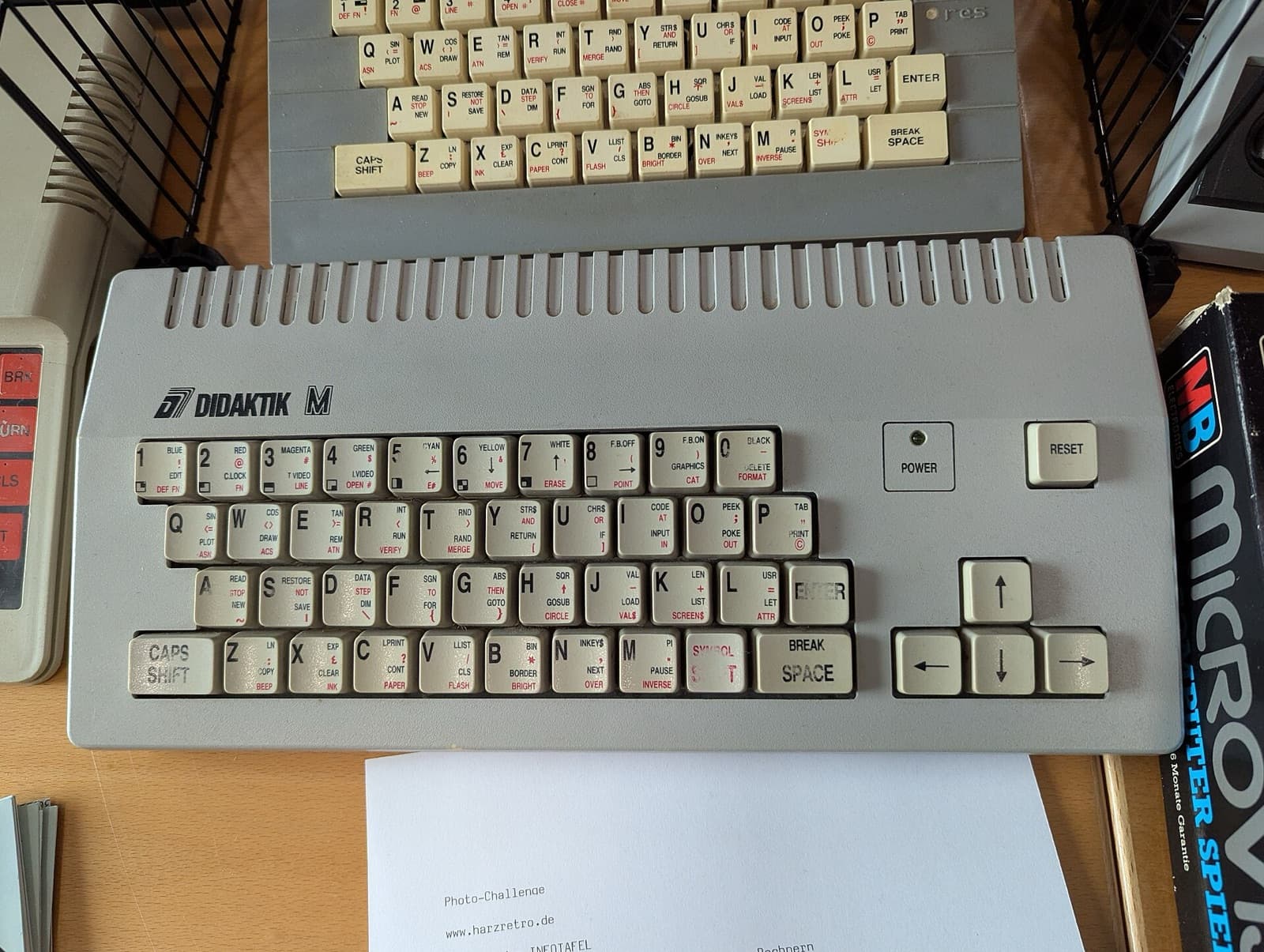
Didaktik M (1990), by then with a Soviet Angstrem chip in place of the ULA.Photo: Thomas Vogt · CC BY 4.0 · Wikimedia Commons 
HC 85, the first of the HC family that ICE Felix made in Romania.Photo: Nicubunu · CC BY-SA 3.0 · Wikimedia Commons 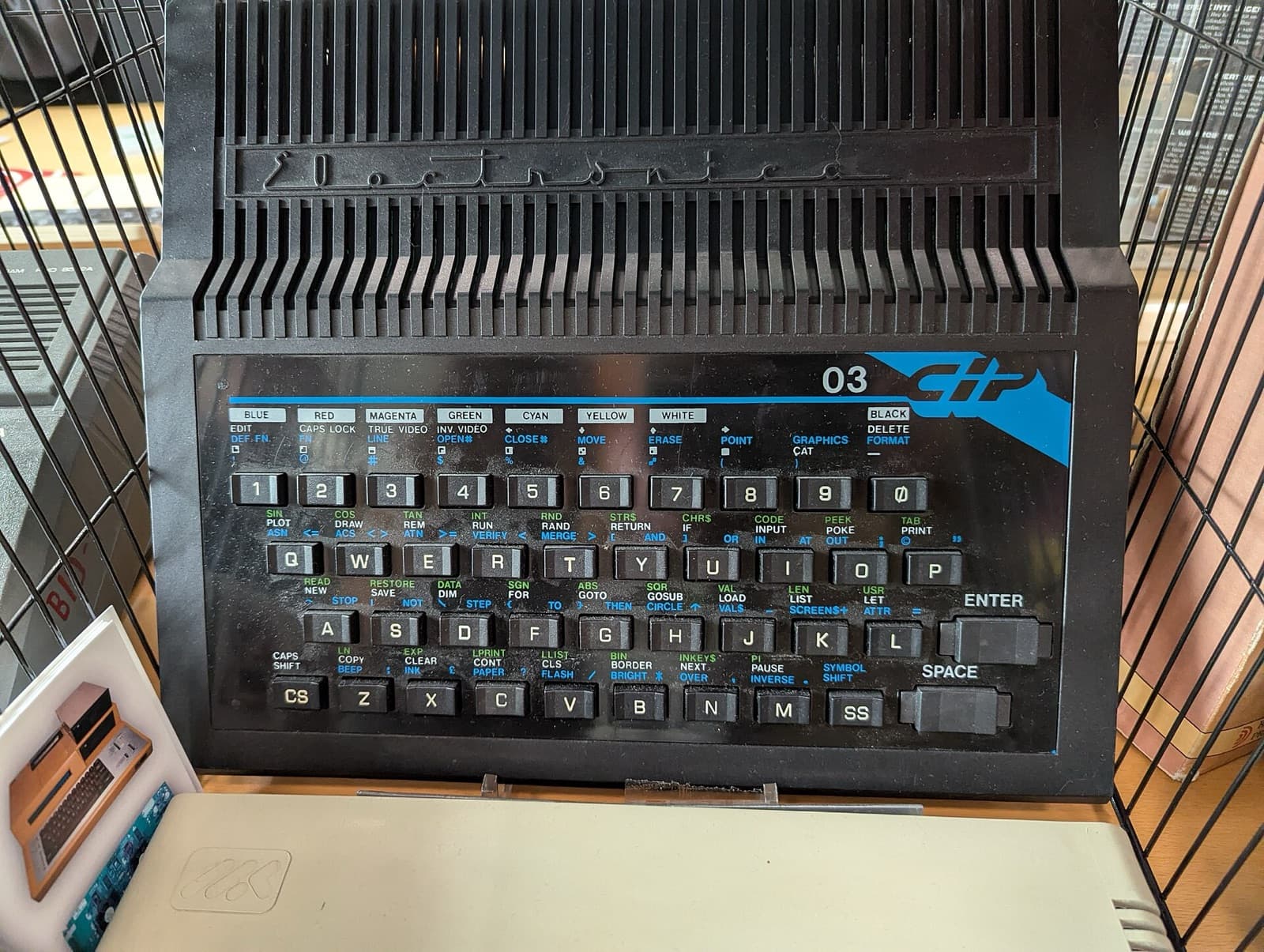
CIP-03, from the Romanian CIP series (1988–1993), which reached 15,000 units.Photo: Thomas Vogt · CC BY 4.0 · Wikimedia Commons 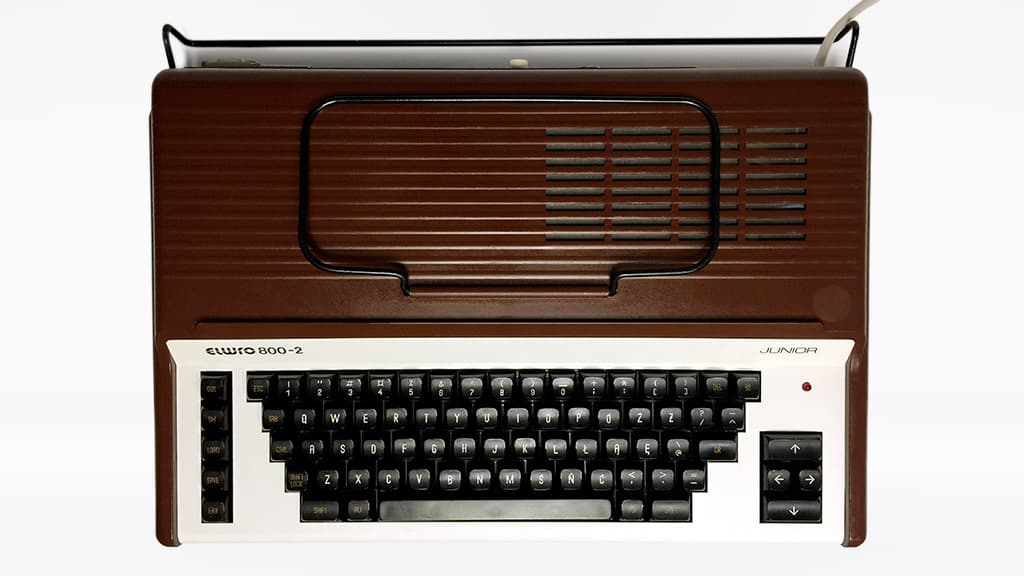
Elwro 800 Junior, made in Poland for schools from 1986 (this is the 800-2 version).Photo: Marcin Robert Kaźmierczak · CC BY 3.0 · Wikimedia Commons 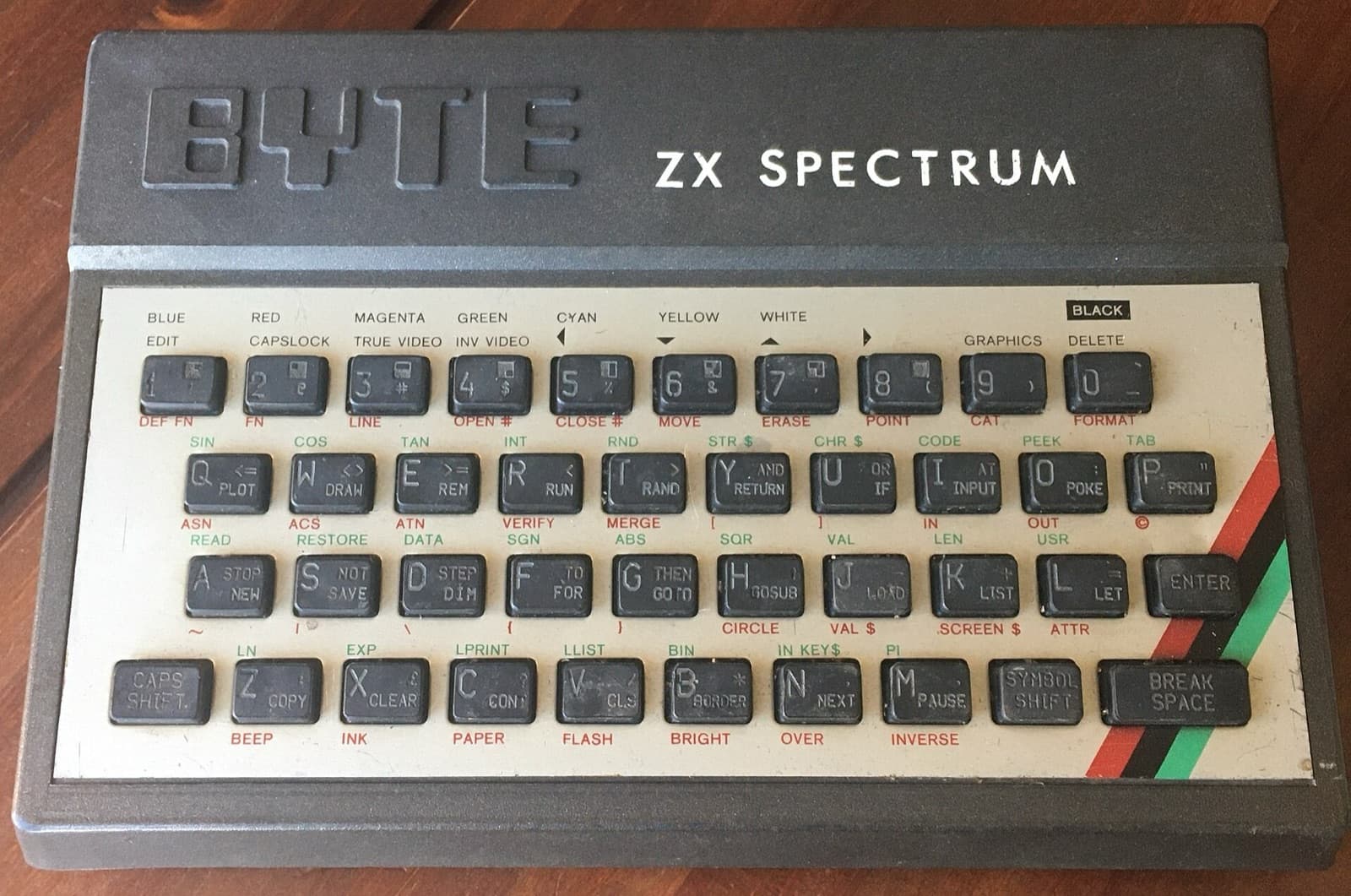
Byte, made in Brest, Belarus. According to the photographer, this one dates from 1991.Photo: SOVIETQUEER117g · CC BY-SA 4.0 · Wikimedia Commons 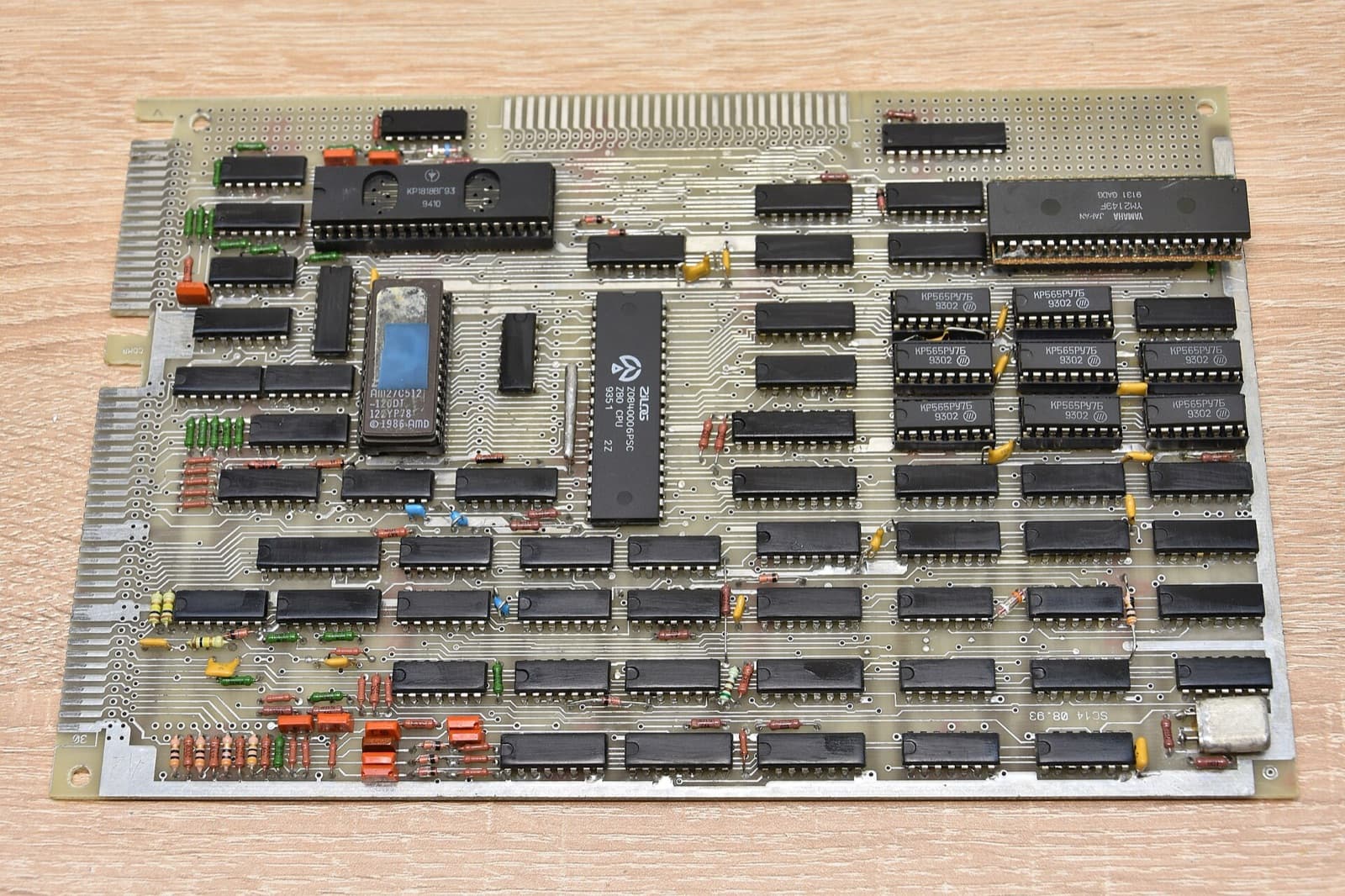
Board of the Scorpion ZS-256 Turbo, Sergey Zonov's clone from St Petersburg.Photo: Vinxru · CC BY-SA 4.0 · Wikimedia Commons