PGA-128 · MC68030RC25 · drawing, not a photo
Motorola 68000Motorola
1987
Motorola 68030
On-chip memory management and two caches: the 68020 tidied into a single part.
The 68030 arrived in 1987 with the memory management unit and instruction and data caches on the same chip. It is in the Amiga 3000, in the 68EC030 version of the Amiga 4000, the Macintosh SE/30, the Atari Falcon and the first NeXT.
- 32
- 32
- 50
- 273,000
- 4 GB
Fewer chips on the board
A 68020 system that wanted virtual memory needed a second chip, the 68851 memory management unit. Motorola announced the 68030 in September 1986 and began shipping it in the summer of 1987, with that function built into the processor.
The core is the 68020's, with tweaks. In return, the 68030 is only slightly faster than a 68020 at the same clock, about 5%, but uses nearly 25% less power and saves an expensive chip on the board.
Inside
It has two caches of 256 bytes each, one for instructions and one for data, with separate internal paths, so the processor can fetch an instruction and a piece of data at the same time. This is what is called a modified Harvard architecture.
The bus gained burst mode: instead of asking for one value at a time, the processor can fill a cache line with four long words in a single operation, if the memory knows how to respond that way.
The integrated MMU is a simplified version of the 68851. It is used for virtual memory, for protecting areas of memory and for changing where memory appears in the processor's eyes. There is no floating-point unit: for that you add a 68881 or 68882.
It has about 273,000 transistors, 32-bit data and address buses and reaches 4 GB. Motorola sold it at 16, 20, 25, 33, 40 and 50 MHz, in a 128-pin ceramic PGA or a 132-pin QFP; in QFP it went no higher than 33 MHz.
The 68EC030
The 68EC030 is the 68030 without the MMU, sold more cheaply for embedded systems, at 25 and 40 MHz. For almost every program it is the same; you only notice the difference in software that needs memory management.
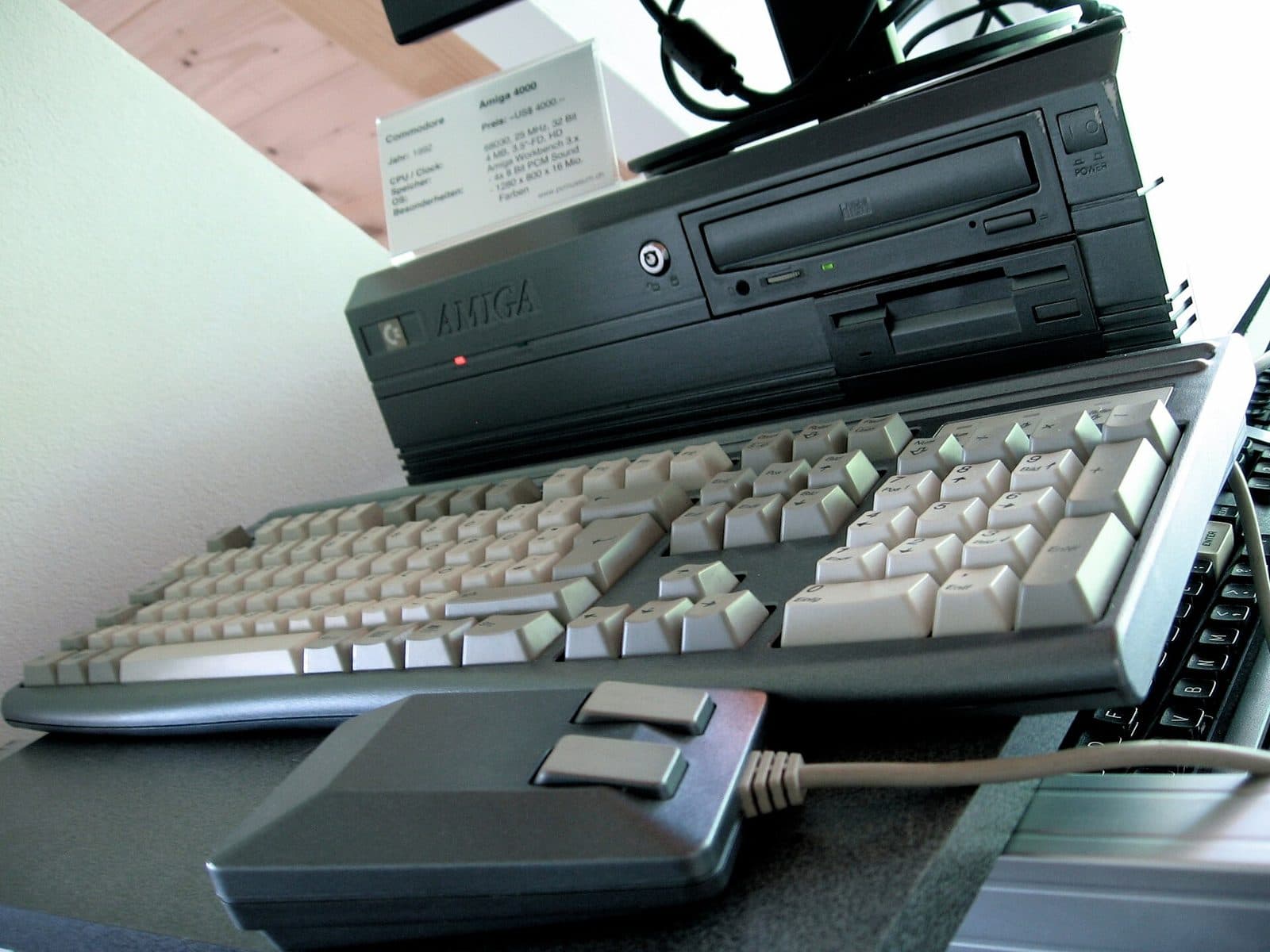
It is what Commodore used in the A4000/030, at 25 MHz, and Sharp in the X68030, also at 25 MHz.
Where it was used
At Apple it was in several Macintosh II models (starting with the IIx of 1988) and in the compact Macintosh SE/30. At Atari, in the TT030 at 32 MHz and the Falcon030 at 16 MHz. The first computer from Steve Jobs's NeXT also had a 68030.
It was also in Sun-3x workstations, the Apollo DN3500 and DN4500, laser printers and Cisco 2500 series routers.
In the Amiga
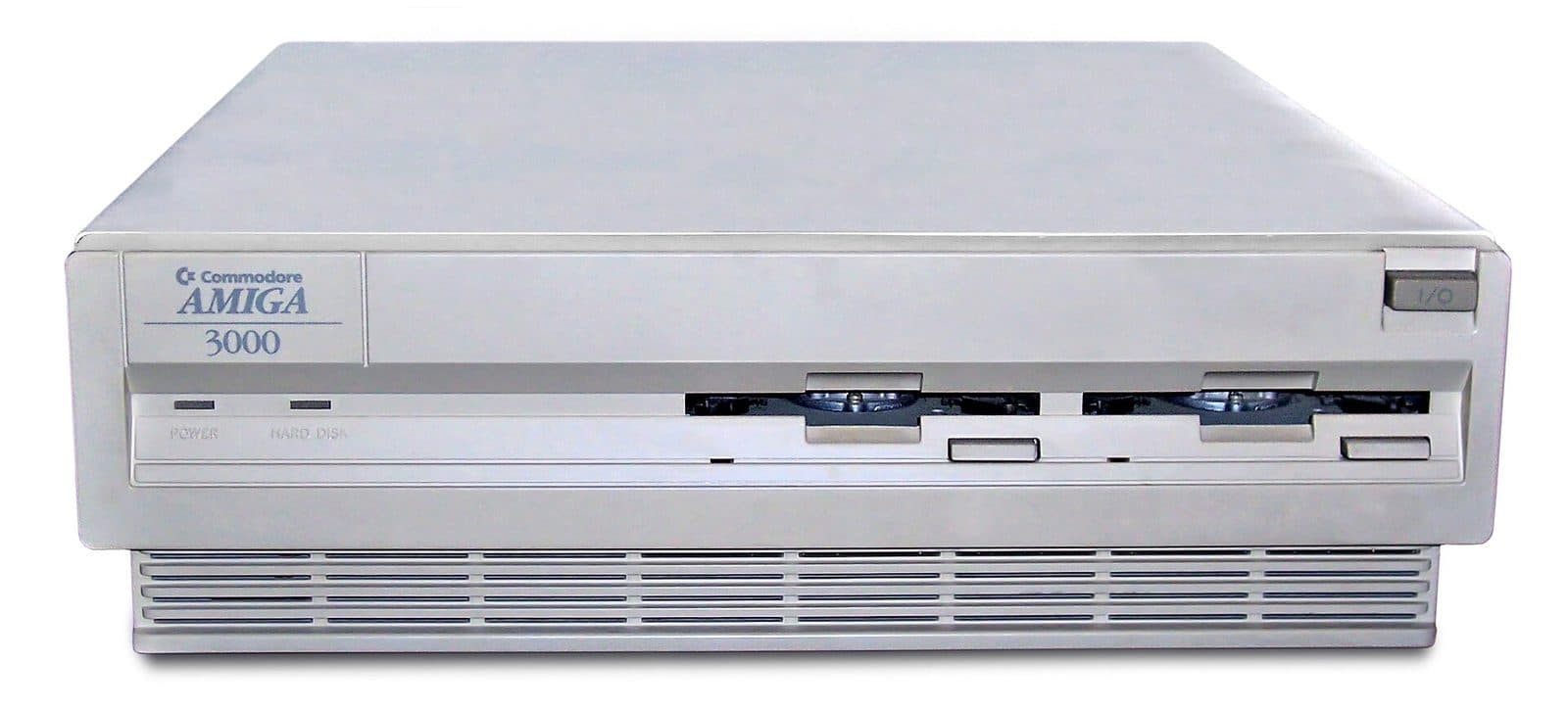
The Amiga 3000, from 1990, came with a 68030 at 16 or 25 MHz, with a maths coprocessor as standard. For the A2000, Commodore made the A2630 accelerator: 68030 and 68882 at 25 MHz, with 2 or 4 MB of 32-bit memory on the board.
On the A1200, 68030 accelerators were the most popular of the 1990s, such as the Blizzard 1230, and they are still being made today. As well as speed, they give you Fast RAM and, with an MMU, allow tools that the 68EC020 doesn't support.
With an MMU, the Amiga gains some useful tricks: copying the Kickstart from ROM into faster 32-bit memory, and using Enforcer, which warns you whenever a program touches memory it shouldn't. On a 68EC030 these tools don't work.
Did you know…
Enforcer, the debugging tool most used by Amiga programmers, needs an MMU: it won't run on a 68EC030 or a 68EC020.
The 256 bytes of data cache are 16 lines of 16 bytes: about three lines of 80-column text fit in there.
Motorola quoted 18 MIPS at 50 MHz.
The A2630 ran at about 25 MHz, almost four times the clock of the A2000's 68000.
The story goes among collectors that some 68EC030s have a working MMU. Motorola never guaranteed it, and no program should count on it.
Tim Berners-Lee wrote the first web browser and the first web server on a NeXT computer, from the family that began with the 68030.