DIP-64 · MC68000P8 · drawing, not a photo
Motorola 68000Motorola
1979
Motorola 68000
The processor that was 32-bit inside and 16-bit outside, and got the Amiga, the Macintosh and the Mega Drive moving.
Unveiled by Motorola in September 1979, the 68000 had 32-bit registers, a 16 MB address space and a clean instruction set, at a time when its rivals still counted in 64 KB. It is in every Amiga up to the A600, the early Macintosh, the Atari ST and the Mega Drive.
- 32
- 16
- 16.67
- 68,000
- 16 MB
Starting from scratch
In the mid-1970s, the Motorola 6800 was losing ground: the Zilog Z80 was more powerful and the MOS 6502 far cheaper. At the end of 1976, Colin Crook, head of operations at the semiconductor division, launched a new project with an ambitious name: MACSS, Motorola Advanced Computer System on Silicon. Tom Gunter was picked as chief architect, and he began putting the team together in January 1977.
The team made a bold decision: drop compatibility with the 6800 and design a new architecture, inspired by DEC's PDP-11 minicomputer, where almost every instruction works with almost every register and addressing mode. The target was one million instructions per second, the figure that at the time separated serious processors from the rest. Nick Tredennick wrote nearly all the microcode, the small internal programs that tell the chip how to carry out each instruction.
The 68000 was unveiled in September 1979. The first samples reached customers in February 1980 and production chips went on sale in November that year, at 4, 6 and 8 MHz. Versions at 10 MHz followed in 1981, at 12.5 MHz in 1982 and, later, at 16.67 MHz.
Inside: 32 bits in the head, 16 in the arms
The programmer sees 16 registers of 32 bits: eight data registers (D0 to D7) and eight address registers (A0 to A7). A7 is the stack pointer and exists twice, one for programs and one for the system, which is why Motorola speaks of 17 registers. For comparison: the Spectrum's Z80 has 8-bit registers that, paired up, reach 16.
On the outside, the 68000 is more modest. The data bus is 16 bits wide and so is the internal arithmetic unit, so a 32-bit addition is done in two halves. Motorola called it a 16/32-bit processor. The address bus has 24 lines, which gives 16 MB of directly addressable memory. A Z80 reaches 64 KB: the 68000 sees 256 times more.
It has 56 instruction types and 14 addressing modes, and two privilege levels: user mode and supervisor mode. With the system stack kept separate, each task can have a small stack, which helps multitasking a great deal. The exception table takes up the first 1024 bytes of memory, with 256 vectors of 32 bits.
Every memory access takes at least four clock cycles. The simplest instruction, copying one register to another, takes exactly those four cycles. At 7.09 MHz, that gives at most about 1.8 million of these instructions per second; more complex instructions take considerably longer.
Variants and second sources
The original 68000 is made in HMOS. In 1985 came the 68HC000, the first CMOS version, designed by Hitachi and launched jointly with Motorola: it uses far less power and reached 20 MHz. Then came the 68HC001, which chooses at start-up between an 8-bit or a 16-bit bus, the 68EC000, a budget version for embedded systems, and the 68SEC000, from 1996, fully static and designed to run at 3.3 V.
The 68008 (with an 8-bit bus) and the 68010 (with fixes for virtual memory) are direct siblings and have pages of their own. Later the family gave rise to microcontrollers with a 68000 core, such as the DragonBall used in Palm devices.
As was customary at the time, big customers demanded a second manufacturer. The 68000 was also made by Hitachi, Mostek, Rockwell, Signetics, Thomson and Toshiba. Motorola stopped producing the HMOS 68000 on 1 June 1996; the CMOS versions carried on for many years.
Far beyond the Amiga
In personal computers, the 68000 was in the Apple Lisa (1983) and the original Macintosh, launched on 24 January 1984 with the processor at 7.8336 MHz. It was in the Atari ST of 1985, at 8 MHz, and in the Sharp X68000, launched in 1987 in Japan only, at 10 MHz. The Sinclair QL used its sibling, the 68008.
In workstations, it paved the way for Sun (Sun-1), Apollo and the HP 9000 series 200. In gaming, it is the main processor of the Sega Mega Drive (October 1988 in Japan), at about 7.6 MHz, and of the Neo Geo (1990), at 12 MHz, and it is also in the Atari Jaguar and many arcade boards.
There are 68000s where you least expect them. The 1984 HP LaserJet had one at 8 MHz, and the 1985 Apple LaserWriter, the first laser printer with PostScript, also used a 68000. Texas Instruments' TI-89 and TI-92 graphing calculators run on a 68000, the original TI-89 at 10 MHz and later revisions at 12 MHz.
The heart of the classic Amigas
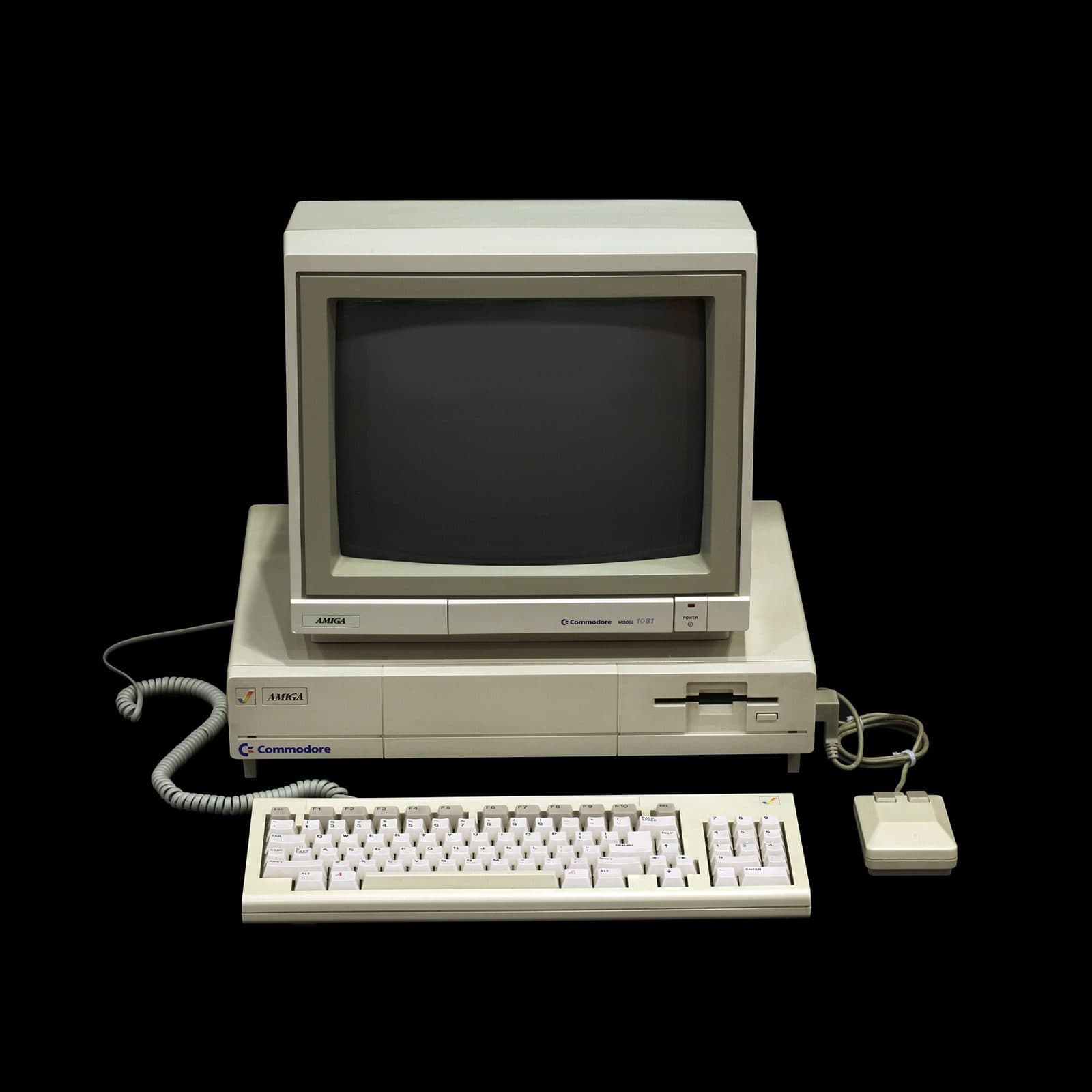
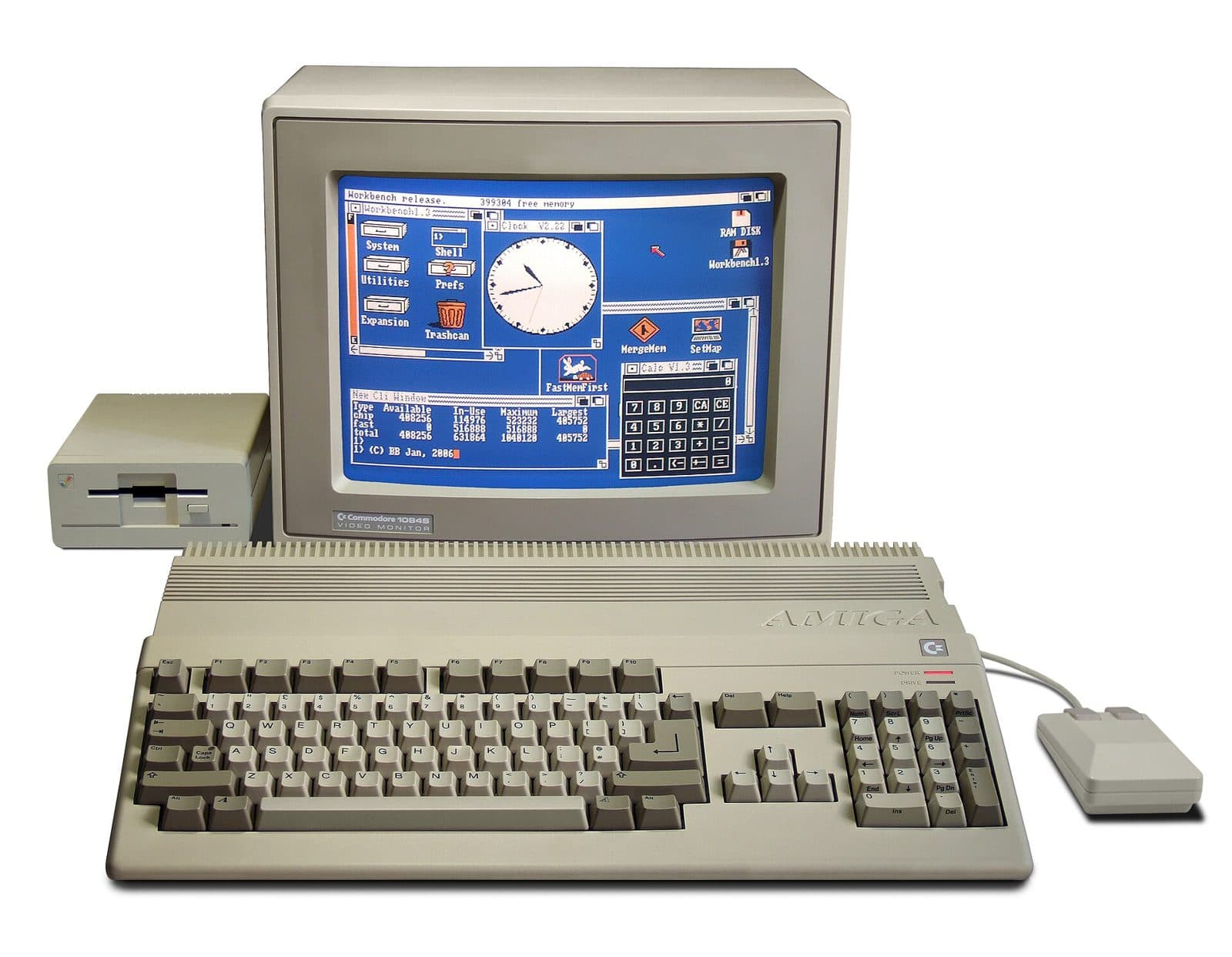
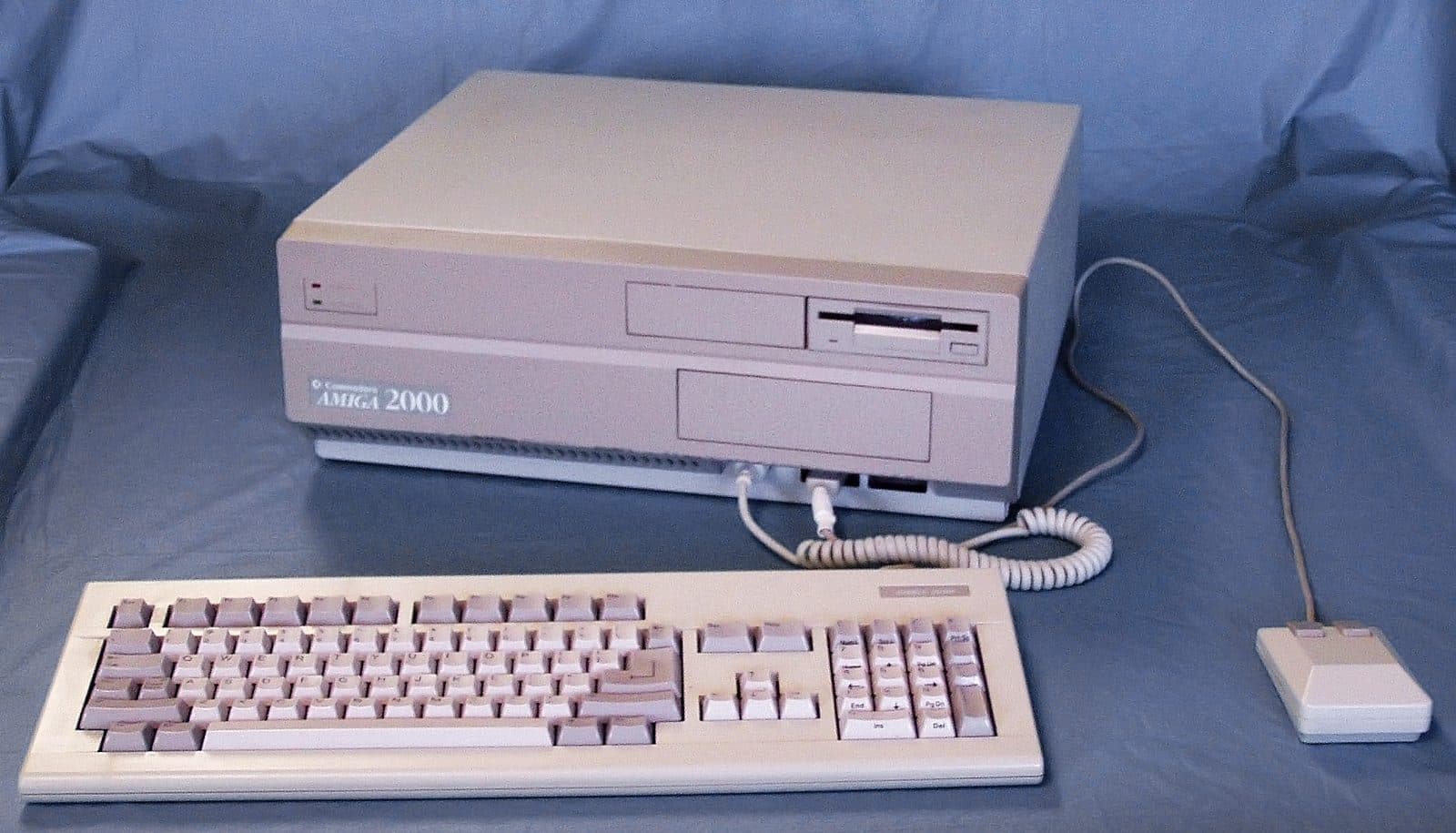
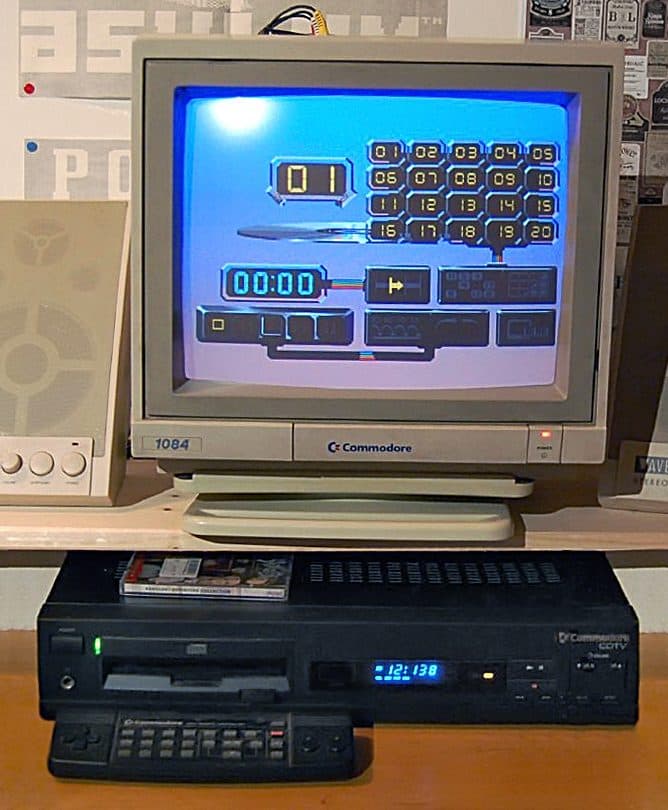
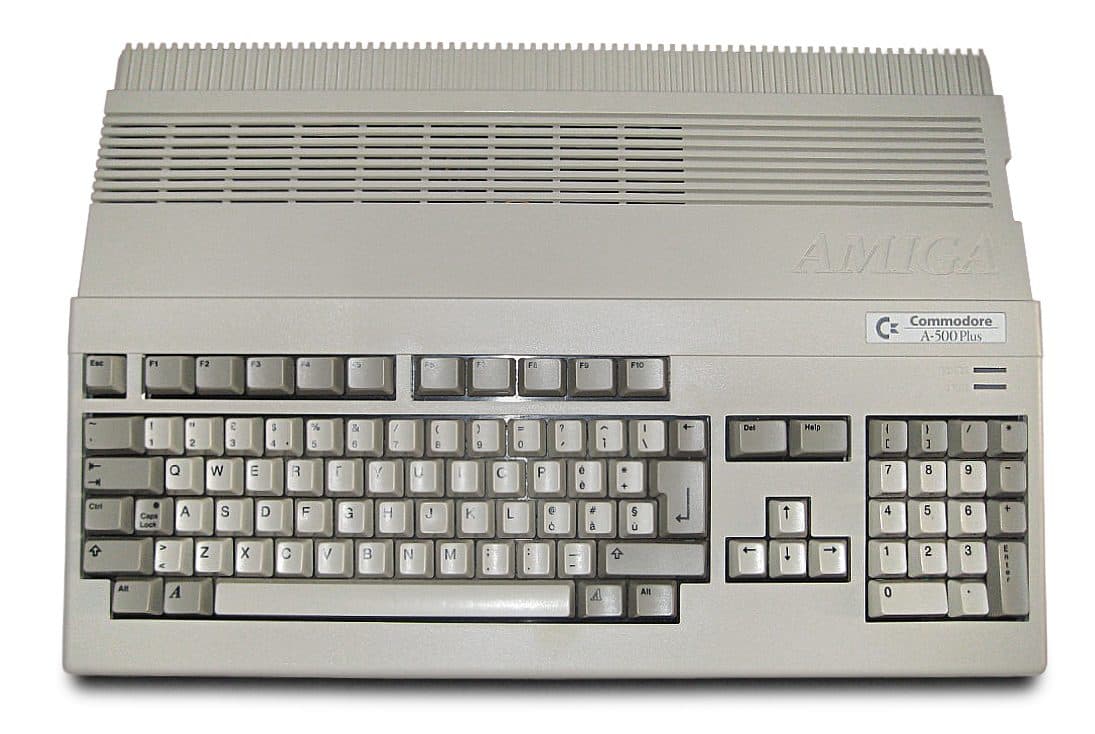
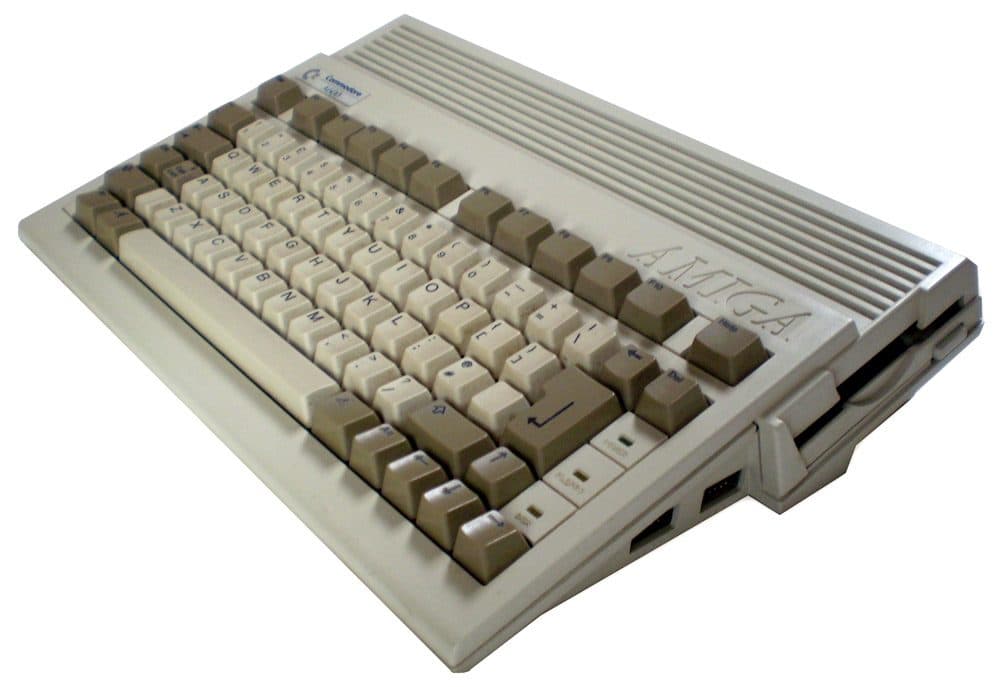
The A1000, A500, A2000, CDTV, A500 Plus and A600 all use a 68000 at 7.16 MHz (NTSC) or 7.09 MHz (PAL). The clock comes from the same crystal that generates the picture, so the processor and the Amiga's chips work to the same beat.
The Amiga makes use of a detail of the 68000: since every memory access takes four cycles, the processor normally uses only one in every two memory cycles. The custom chips (sound, floppy, sprites, display and the Copper) fit their accesses into the gaps. When the Blitter or the heavier graphics modes need more cycles, it is the processor that waits.
In the A500, A500 Plus, A1000, A2000 and CDTV the 68000 is a 64-pin DIP, usually in a socket, which lets you swap it or fit accelerators that plug into its place. The A2000 also has a dedicated slot for processor cards. In the A600 the 68000 comes in a 68-pin PLCC, soldered to the board: A600 accelerators clamp on top of the chip with a clip.
Did you know…
Tom Gunter called the 64-pin plastic package the "Texas cockroach": he said it was the size of a chocolate bar, with lots of legs.
It is often said that the name comes from the number of transistors, about 68,000. Gunter told of another coincidence: the chip came out with an area of 68,000 square mils, at a time when Motorola had 68,000 employees.
The story goes that IBM passed over the 68000 for the IBM PC because of cost. According to Gunter, IBM wanted a version with an 8-bit bus, like the Intel 8088, and Motorola refused to make it in time; the 68008 only arrived in 1982.
Steve Jobs asked for the 68000 at 15 dollars for the Macintosh, when it was selling at 125. Motorola drew up a descending price schedule and, according to Gunter, the average price of the first million units came to 14.76 dollars.
It was reportedly one of the last major processors designed with pencil and paper: the design was checked using hand-coloured plots on light tables.
The 68000 has no A0 pin. It picks the upper or lower byte with two signals of its own, UDS and LDS, and reading a word at an odd address causes an address error.
The "ST" in Atari ST stands for Sixteen/Thirty-two, the 16 bits outside and 32 inside the 68000.
In Japanese, the Sharp X68000 is read as "X sixty-eight thousand": the computer is named after its processor.