DIP-48 · MC68008P8 · drawing, not a photo
Motorola 68000Motorola
1982
Motorola 68008
The 68000 with an 8-bit bus: cheaper to wire up, slower at work.
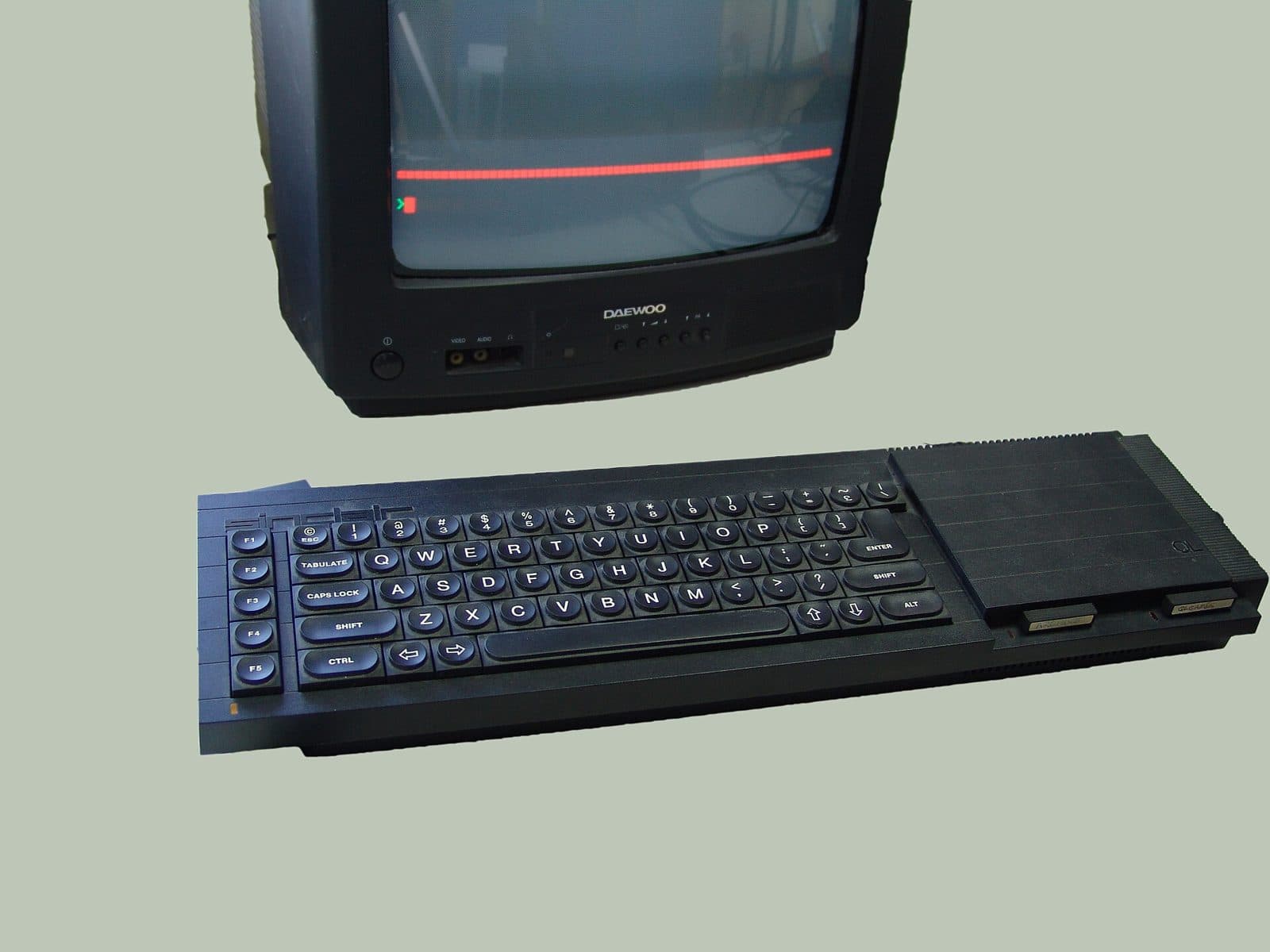
The 68008, from 1982, is a 68000 inside with an 8-bit data bus, designed for cheap memory and peripherals. It was the processor of the Sinclair QL, at 7.5 MHz.
- 32
- 8
- 10
- 70,000
- 1 MB
The 68000 IBM wanted
When IBM chose the processor for the PC, the 68000 lost to the Intel 8088, which had an 8-bit bus and could use the cheap, plentiful 8-bit peripherals. Tom Gunter, the 68000's architect, later said that Motorola had refused to make an 8-bit version and that, looking back, one person could have done it in under a month.
That version did eventually arrive in 1982: the 68008. The idea was the same as the 8088's: keep the processor 32-bit inside and save on the rest of the board, with 8-bit memory and support chips, simpler and cheaper.
Inside
Inside it is identical to the 68000: the same 16 registers of 32 bits, the same instructions, the same addressing modes. A program written for one runs on the other. The only difference is in how it talks to memory.
With an 8-bit bus, every 16-bit word has to be read in two goes, and a 32-bit one in four. So, at the same clock speed, the 68008 runs at roughly half the speed of a 68000.
The 48-pin DIP version has 20 address lines and reaches 1 MB of memory. The 52-pin PLCC version has 22 lines and reaches 4 MB. Motorola sold it at 8 and 10 MHz.
The price of saving
Every memory access still takes at least four clock cycles, as on the 68000, but now it brings back only one byte. Reading a 32-bit value costs four accesses, at least 16 cycles, where the 68000 needed two accesses and 8 cycles. Even fetching the instructions themselves, which are 16 bits or longer, takes twice as long.
Later, Motorola carried the same idea over to CMOS chips: the 68HC001 and 68EC000 choose at start-up whether to work with an 8-bit or a 16-bit bus, which gives the same option with lower power consumption.
The QL's processor
Sinclair used the 68008 in the QL, announced on 12 January 1984, at 7.5 MHz. That way the QL had a processor that was 32-bit inside on an 8-bit board, like those of the computers Sinclair was already making.
The same QL design was used by ICL in the One Per Desk, an office terminal with a built-in telephone. In Sweden, the Luxor ABC 1600 also used a 68008.
The QL community took the architecture far beyond the 68008: there are boards and successors with the 68020, 68040 and even 68060, such as the Q60, which run systems descended from QDOS, such as SMSQ/E.
Did you know…
Tom Gunter said that the 8-bit version, had it been made in time, would have fitted in a 48-pin package: which is exactly what the 68008 ended up with.
The QL runs at 7.5 MHz, below the 8 MHz of the slowest version Motorola sold.
The 68008 has about 70,000 transistors, only slightly more than the 68000: almost everything inside is the same.
The same 68000 code runs on the 68008 unchanged; it just takes longer, because each memory access brings back half the bits.
Motorola stopped making it in 1996.
Linus Torvalds programmed on a Sinclair QL, with a 68008, before moving to the PC where Linux was born.